

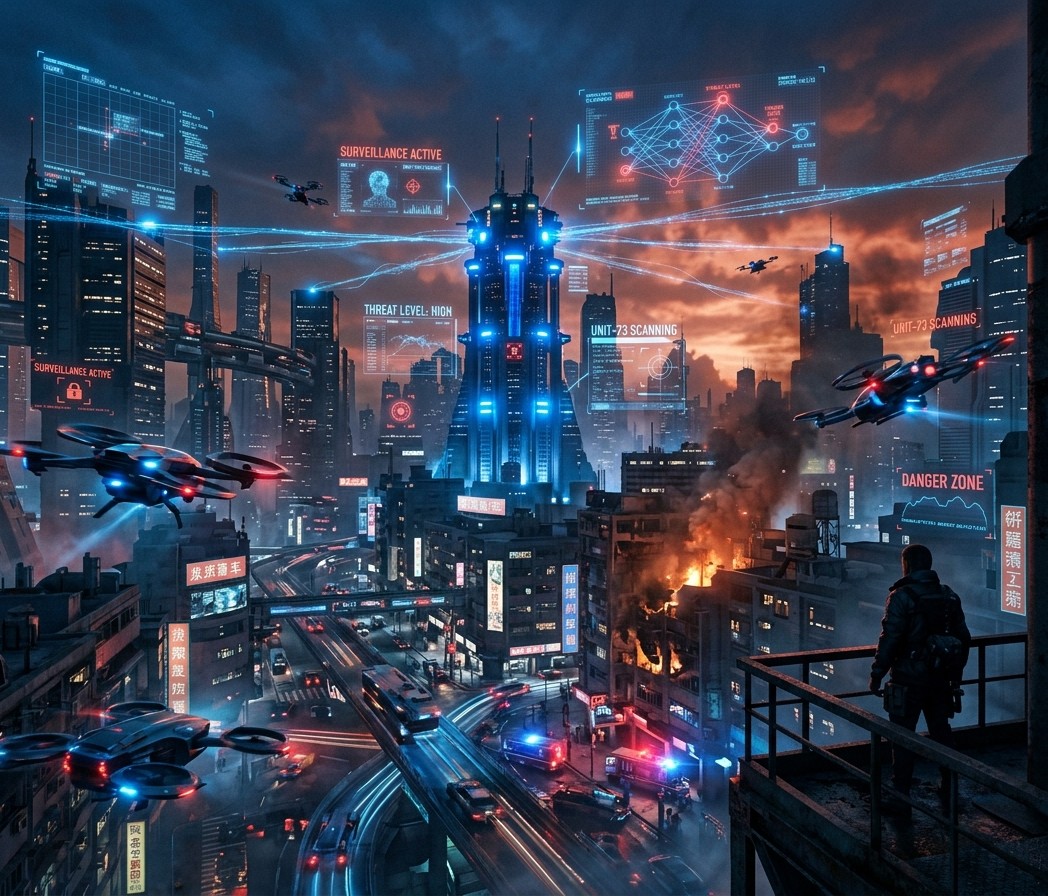

There is a quiet transformation happening inside modern defense systems. It is not driven by new weapons alone, but by something far more fundamental. The way information is collected, interpreted, and acted upon in military environments is being rebuilt from the ground up.
At the center of this shift is AI-powered intelligence fusion and targeting. It is changing how militaries understand the battlefield, how they prioritize threats, and how quickly they can act when seconds matter. What once took entire teams of analysts working across separate systems is now being compressed into a single integrated flow of intelligence.
The result is a new operational reality where speed is no longer measured in hours or even minutes, but in near real-time decision cycles.
The Collapse of the Traditional Kill Chain
For decades, military operations followed a structured sequence known as the kill chain. It begins with detection, moves through identification and tracking, and ends with engagement and assessment. Each step depended heavily on human interpretation and manual coordination across multiple systems.
The problem was not lack of intelligence. It was excess of it.
Modern battlefields generate overwhelming volumes of data. Satellite imagery, drone footage, intercepted communications, radar feeds, and ground reports all arrive simultaneously. Human analysts can only process so much at a time, and critical signals often get buried in noise.
AI systems have changed this dynamic completely. Instead of analysts manually searching for patterns, machine learning models now scan continuous streams of data and highlight what matters most. They detect anomalies, track movement patterns, and connect seemingly unrelated signals into a coherent operational picture.
This is what intelligence fusion means in practice. It is not just data collection. It is real-time synthesis.
From Fragmented Systems to Unified Intelligence
Historically, military intelligence relied on multiple disconnected platforms. One system handled satellite imagery. Another processed drone feeds. Others managed signals intelligence or operational planning. Analysts had to manually correlate insights across these systems.
This fragmentation slowed everything down.
Modern AI fusion platforms remove that barrier by combining multiple intelligence streams into a unified environment. Instead of switching between tools, commanders and analysts see a single dynamic battlefield map that updates continuously.
Recent defense systems, including those used in large-scale operations, have demonstrated how powerful this integration can be. By fusing satellite data, drone surveillance, and signals intelligence into one interface, military teams can now identify and prioritize targets in a fraction of the time previously required. Reports from recent deployments suggest that targeting cycles that once took hours can now be completed in minutes through integrated AI workflows.
The change is not just technical. It is structural. Intelligence no longer flows through separate silos. It moves through a connected cognitive system.
How AI Interprets the Battlefield
At the core of intelligence fusion is pattern recognition at scale. AI models are trained to detect objects, behaviors, and relationships across massive datasets. In satellite imagery, they identify vehicles, infrastructure changes, and movement patterns. In drone footage, they track real-time activity across dynamic environments. In signals intelligence, they identify communication patterns and anomalies that may indicate operational intent.
What makes this powerful is not any single input. It is the combination.
When multiple sources confirm the same pattern, confidence increases. When signals diverge, systems flag uncertainty for human review. This layered analysis allows commanders to see not just what is happening, but what is likely to happen next.
Predictive modeling adds another dimension. By analyzing historical and real-time data together, AI systems can estimate probable movement, potential escalation points, and emerging risk zones. This shifts intelligence from reactive to anticipatory.
The battlefield becomes less about observation and more about forecasting.
Compression of Decision Time
One of the most significant changes brought by AI-powered targeting is the compression of the decision cycle.
In traditional operations, the path from detection to engagement involved multiple layers of verification and coordination. Intelligence had to be gathered, reviewed, cross-checked, and then passed through command channels before action could be taken.
Today, integrated systems can perform many of these steps simultaneously.
AI identifies a potential target. It cross-references it with multiple intelligence streams. It evaluates historical patterns and operational context. It then presents a structured recommendation to human operators, often with suggested courses of action.
This reduces cognitive load and eliminates delays caused by manual data reconciliation.
In some operational environments, this has compressed the entire targeting process from hours into minutes. In high-tempo scenarios, this difference is not incremental. It is decisive.
Human Judgment Still Matters, But Its Role Is Changing
Despite the speed of these systems, human involvement remains central. The difference is that human judgment is shifting upward in the decision chain.
Instead of spending time gathering and organizing data, operators now focus on interpreting AI-generated insights and making final decisions under time pressure.
This creates a new kind of workflow. Humans are no longer the primary processors of information. They are the final evaluators of machine-synthesized intelligence.
This shift raises important questions about reliance and interpretation. When AI systems filter what humans see, they also shape how decisions are framed. Even without direct control, the structure of information can influence outcomes.
The relationship between human and machine is no longer sequential. It is layered and interactive.
The Rise of Integrated Command Environments
Modern command centers are evolving into fully digital environments where intelligence, planning, and execution converge. Instead of static maps and delayed reports, commanders interact with live systems that update continuously.
These environments are designed for speed. They prioritize clarity, threat ranking, and operational suggestions. AI acts as a continuous analytical layer, scanning incoming data and surfacing what matters most.
Some systems now integrate additional capabilities such as automated resource allocation, mission planning suggestions, and real-time battlefield updates. The goal is not to replace human command but to augment it with continuous computational awareness.
In effect, the command center becomes a living system rather than a static control room.
Strategic Implications of Intelligence Fusion
The impact of AI-powered targeting extends beyond efficiency. It changes the structure of deterrence and conflict itself.
When intelligence cycles shorten, response times shrink. When response times shrink, escalation dynamics change. Decision advantage becomes dependent on who processes information faster and more accurately.
This creates pressure for continuous technological advancement. Militaries that cannot process intelligence at machine speed risk falling behind in operational awareness.
At the same time, the concentration of intelligence into unified systems increases dependency. When one platform integrates multiple layers of battlefield awareness, it becomes critical infrastructure.
This introduces both strategic advantage and systemic risk.
The Direction of Future Warfare
The future of intelligence fusion is moving toward even deeper integration. Satellite networks, autonomous drones, ground sensors, and cyber intelligence systems are gradually becoming part of a single interconnected ecosystem.
In this environment, the battlefield is not just observed. It is continuously modeled.
Every movement, signal, and pattern contributes to a constantly updating picture of reality. The goal is not only to understand the present but to anticipate the next moment before it happens.
This is where warfare is heading. Not toward more weapons, but toward faster cognition.
Final Thought
AI-powered intelligence fusion is reshaping the core logic of military operations. It compresses time, unifies fragmented systems, and transforms how decisions are made in high-stakes environments.
What used to be a slow, layered process of human interpretation is becoming a continuous flow of machine-assisted understanding.
The battlefield is no longer just physical. It is computational, adaptive, and always in motion.
And the most important advantage is no longer firepower alone, but the ability to see, understand, and act before anyone else does.